


Search websites, locations, and people




ABOUT
ACADEMICS
RESEARCH
ADMISSIONS
NEWS & EVENTS
CAMPUS LIFE
INNOVATION
CAREERS

If you are interested in supporting us or making a contribution, please contact:
Public Affairs, Westlake Institute for Advanced Study
Email: info@wias.org.cn
OR
Westlake Education Foundation
Email: office@wefoundation.org.cn
Phones: 0571-86886859
Fax: 0571-85271986

New Westlake Prof. Dieter A. Wolf Keeps His Eyes on Cancer
Yi Feng
04, 2023
Email: zhangchi@westlake.edu.cn
Phone: +86-(0)571-86886861
Office of Public Affairs
Even the most ferocious wildfire starts with a humble spark. Cancer, the nightmare that casts a shadow over our health, also starts with one cancerous cell in our body.
One turns into two, two becomes four, then four becomes 16. The cell replication goes out of control and turns one abnormal cell into malignant tumors.
From the University of Munich in Germany to Harvard, Stanford, and the Technical University of Munich, Dieter A. Wolf, M.D., has kept his eyes on cancer. One hallmark of cancer is unchecked cell division. Prof. Wolf has set a goal to find a drug that could put a stop to it.
Recently, Prof. Wolf joined the School of Life Sciences at Westlake University full time to set up the RNA and Disease Laboratory.

Cutting off the supply
Many have heard of the idea of “starving cancer cells”.
A cell needs to be of a certain size before it can divide into two daughter cells. To grow to that size, cells need energy. Cancer cells have a seemingly endless appetite for energy to maintain their unchecked growth.
Wolf's research group is committed to studying mechanisms of protein and energy homeostasis in tumorigenesis and has had a significant impact on target screening of anticancer drugs.
Protein is the main bearer of life activities and an important component of all cells in the human body. "Scientists have studied the protein synthesis mechanism for decades, but our understanding remains limited," Wolf said. Newly synthesized proteins must be folded correctly and sent to the right place within the cell, and mistakes at any stage could cause disease. "Even if all those steps have happened, the game is still not over. When the protein has errors that cause it to function abnormally, the protein needs to be removed from the cell or else, cells will die by apoptosis,” he said.
Previously, the Wolf team has taken the lead in comprehensively and systematically analyzing the proteome of eukaryotic cells by using proteomics and conducted large-scale comparative analysis of mRNA and protein expression differences in eukaryotic cells. They are still trying to understand how the dynamic information that exists in human DNA translates into proteins that function in cells. In other words, they are studying the life cycle of proteins from birth to death, looking for ways to stop cancer cells from dividing.
One of the group’s research areas focuses on the multiprotein complex elF3. There is evidence that under- or overexpression of the 13 subunits of elF3s can enable the transformation of cells into malignant cancer cells. The role of elF3 and its downstream targets are related to cell cycle control, stress response, and apoptosis in cancer cells, including breast cancer.
Oxygen delivery key in treating cancer
Another important structure in cancer cells are the mitochondria.
Around 2013, Wolf's team discovered that small molecule compound SMIP004 was able to eliminate prostate cancer cells without harming healthy cells, but the mechanism behind this remained unclear.
In a later study, the team found that SMIP004 interfered with the function of mitochondria.
Mitochondria are responsible for producing energy and controlling cell growth and death, and they do so by consuming oxygen. To extract enough energy, many cancer cells require mitochondria to "breathe" excessively, which can result in a lack of oxygen in their surrounding microenvironment.
Contrary to intuition, cancer cells tend to go rogue in a hypoxic environment: Not only do they grow more, they also metastasize and dodge radiotherapy, chemotherapy, and the immune system. The small molecule compound SMIP004 effectively inhibits the respiration activity of mitochondria and has a dual anti-cancer activity: Through a condition known as oxidative stress, SMIP004 raises reactive oxygen species (ROS) levels in mitochondria by ~40 percent, causing cancer cells to cease cell division and eventually die. At the same time, more oxygen is available to reduce hypoxia in the tumor environment which can stimulate the anti-cancer activity of T lymphocytes.
Furthermore, his team also found that SMIP004 could effectively target stem-like drug-resistant cancer cells, inhibit the proliferation of triple-negative breast cancer transplanted in mice, and promote tumor immune surveillance. This work sets the stage for the further development of SMIP004 as a potential cancer therapeutic.
Understanding disease pathogenesis to a level that enables the discovery of small molecule compounds as potential therapies for cancer and other diseases is the direction of Prof. Wolf's research at Westlake University.
Cancer is typically referred to by the tissue in which it originated or manifested, such as lung cancer, breast cancer or colon cancer. Yet scientists and doctors are moving away from such descriptions. In the publication Cancer Insights, the author argued that just as there aren’t two identical leaves on a tree, so there aren’t two identical cancers. For example, the drugs that work for one group of lung cancer patients might not work for others.
“When it comes to cancer treatment, we need to go back to the basic mechanisms,” said Wolf. His team’s approach is to identify biomarkers of common metabolic vulnerabilities found in cancers from different tissue types, regardless of the organ of origin or size of the tumor, and then target that vulnerability with a specific small molecule therapy.
Never too late for something new
When asked why he chose Westlake, Wolf said, "I can do my favorite research here, and I really look forward to being able to do creative scientific work over the next 10 or 15 years."
Take the discovery of SMIP004 for example. Wolf’s team has been working on this topic for more than 10 years, and only managed to publish three papers. "Personally, I am quite proud of it, but I've also met a lot of naysayers along the way who didn’t find this research direction very promising.”
Wolf sees himself as a persistent person. He hopes to continue his search for more effective and diverse small molecules while deepening his understanding of the underlying mechanisms. "Unless we are proven wrong, I will definitely keep doing it."
His favorite research areas also include the mechanisms of RNA-related diseases, the pathogenic mechanisms of muscle and neurodegenerative diseases, and further seeking treatments for such diseases.
He found the trust and support needed at Westlake.
When asked about his philosophy in advising Ph.D. students, he said, "I try to encourage students to choose a research topic they are passionate about and that they believe in.”
He hopes to provide a creative environment for his students, where they can receive help and guidance, but also sufficient opportunities and time to work independently. Students need freedom to make mistakes as they encounter problems, analyze them, and ultimately solve them.
"We should encourage students’ independence – this is what we are training them for," he added. “Our students are typically smart but smart people also learn best from their own mistakes. I don't want them to shy away from difficulty for fear of failing. My door is always open to them.”
Wolf holds his students to the same standard as himself: It’s never too late to go on an adventure and try something new.
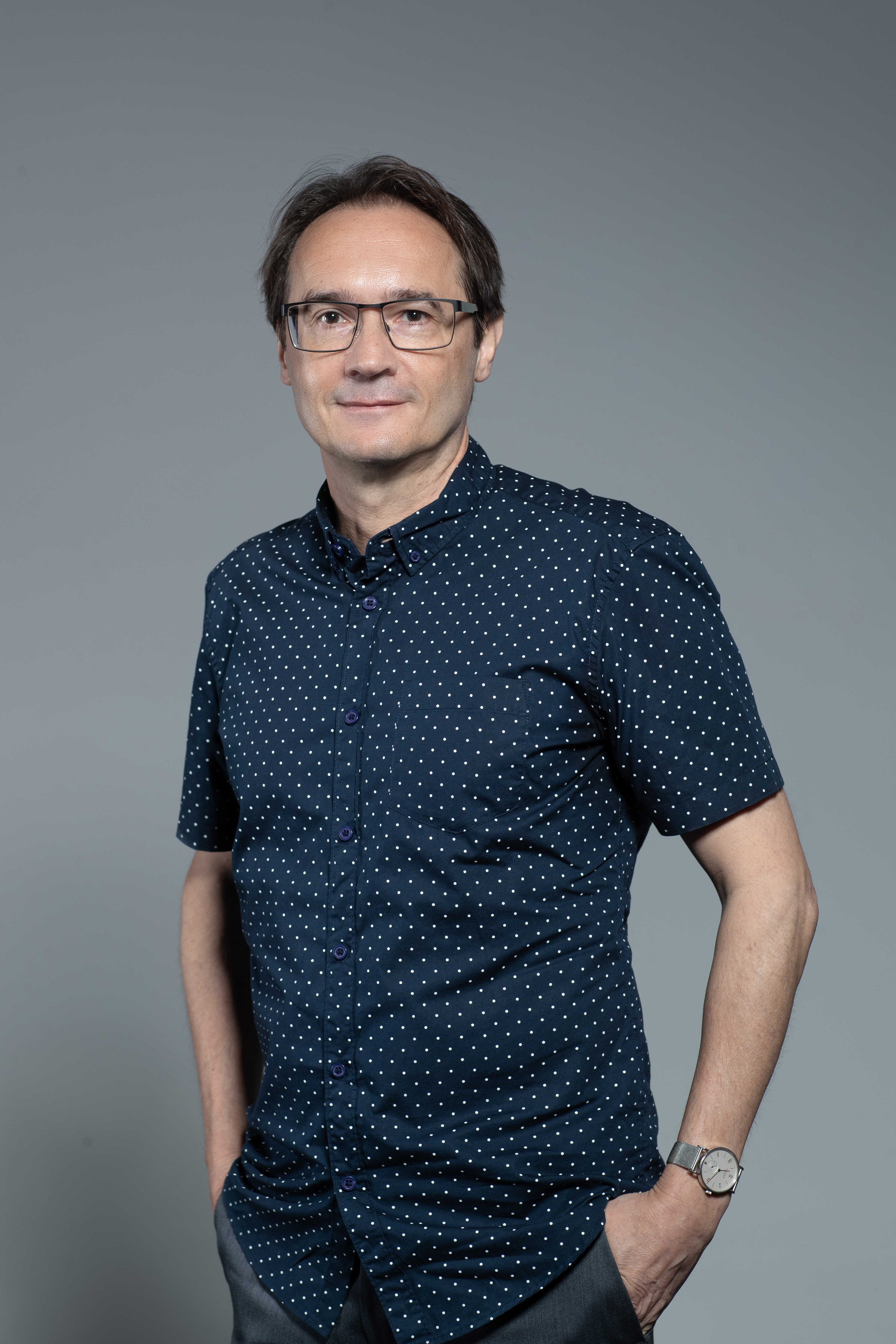
About Prof. Dieter A. Wolf
He received his doctorate in medicine in 1995 from the University of Munich, Germany, and then completed postdoctoral research at Harvard University and Stanford University. He joined the Harvard School of Public Health as an assistant professor in 1998, and was promoted to associate professor in 2003. In 2007, he joined the Burnham Institute as a full professor. From 2015 to 2019, he was a distinguished professor at Xiamen University. In 2019, he joined the MGZ Medical Genetics Center in Munich as the Medical Head of the Biomarker Program and a resident in human genetics. Since 2021, he has held an adjunct group leader position at the Technical University of Munich. In 2023, he joined Westlake University as a full professor in the School of Life Sciences, setting up the RNA and Disease Laboratory.
RELATED



-
STUDY WITH US
-
WORK WITH US
-
CONTACT US
-
YUNGU CAMPUS
-
No. 600 Dunyu Road, Sandun Town, Xihu District, Hangzhou, Zhejiang PR China Post code:310030 E-mail:office@westlake.edu.cn
-
-
YUNQI CAMPUS
-
No.18 Shilongshan Road Cloud Town, Xihu District, Hangzhou, Zhejiang PR China Post code:310024 E-mail:office@westlake.edu.cn
-
-
-
浙ICP备18025489号 浙公安备33010602007514号 Copyright © Westlake University. All Rights Reserved
-


If you are interested in supporting us or making a contribution, please contact:
Office of Public Affairs, Westlake University
Email: media@westlake.edu.cn
OR
Westlake Education Foundation
Email: office@wefoundation.org.cn
Phones: 0571-86886859
Fax: 0571-85271986
