


Search websites, locations, and people




ABOUT
ACADEMICS
RESEARCH
ADMISSIONS
NEWS & EVENTS
CAMPUS LIFE
INNOVATION
CAREERS

If you are interested in supporting us or making a contribution, please contact:
Public Affairs, Westlake Institute for Advanced Study
Email: info@wias.org.cn
OR
Westlake Education Foundation
Email: office@wefoundation.org.cn
Phones: 0571-86886859
Fax: 0571-85271986

Westlake Ph.D. Students Dianyu Chen & Bingqing Yao Win 2023 Ray Wu Prize
09, 2023
Email: zhangchi@westlake.edu.cn
Phone: +86-(0)571-86886861
Office of Public Affairs
Recently, the winners of the 2023 Ray Wu Prize were announced. Among the 10 names were two doctoral students at Westlake University: Dianyu Chen and Bingqing Yao.
In 2008, the Ray Wu Memorial Fund was established by CUSBEA students and friends of Ray Wu to honour his legacy of supporting young scientists. The Ray Wu Prize awards graduate students for excellence in life science research for innovation, independent thinking, and dedication. A candidate must be a graduate student who is pursuing a degree of Doctor of Philosophy (Ph.D.) in an institution located in mainland China, Hong Kong, Macau, Taiwan, or Singapore.
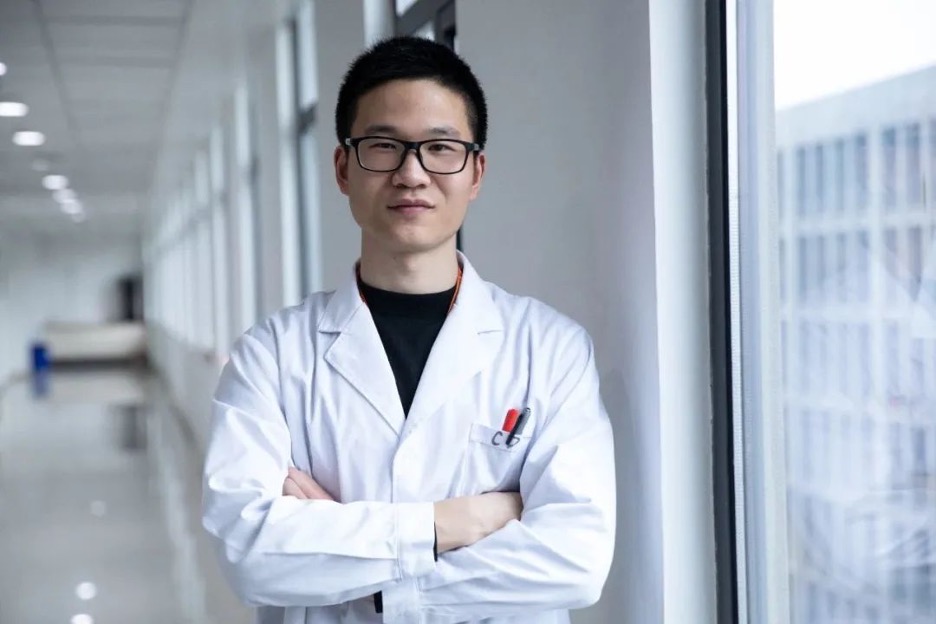
Dianyu Chen
Dianyu Chen joined the School of Life Sciences at Westlake University as a doctoral student in 2020. His research reveals the important role of oxidative phosphorylation pathways in the process of antibody affinity maturation.
High-affinity neutralizing antibodies are an important weapon for the body to resist pathogenic microbial infections, and for a long time have been the basis for most vaccines. Germinal Center B cells achieve positive screening for mutations in the high-affinity B cell receptor (BCR) through a Darwinian evolution process. The molecular mechanisms behind positive selection of high-affinity GC B cells have not been systematically investigated due to the lack of effective molecular markers to distinguish GC B cells of different affinities from a polyclonal immune response.
Mutations that significantly increase antibody affinity in the classic NP-KLH immunized mouse model are known. Based on this model, Chen correlated antibody mutation patterns with transcriptome expression levels at the single-cell level, revealing the key role of the oxidative phosphorylation pathway in the process of antibody affinity maturation.
In 2021, Chen was a co-first author of a study published in Nature Immunology.
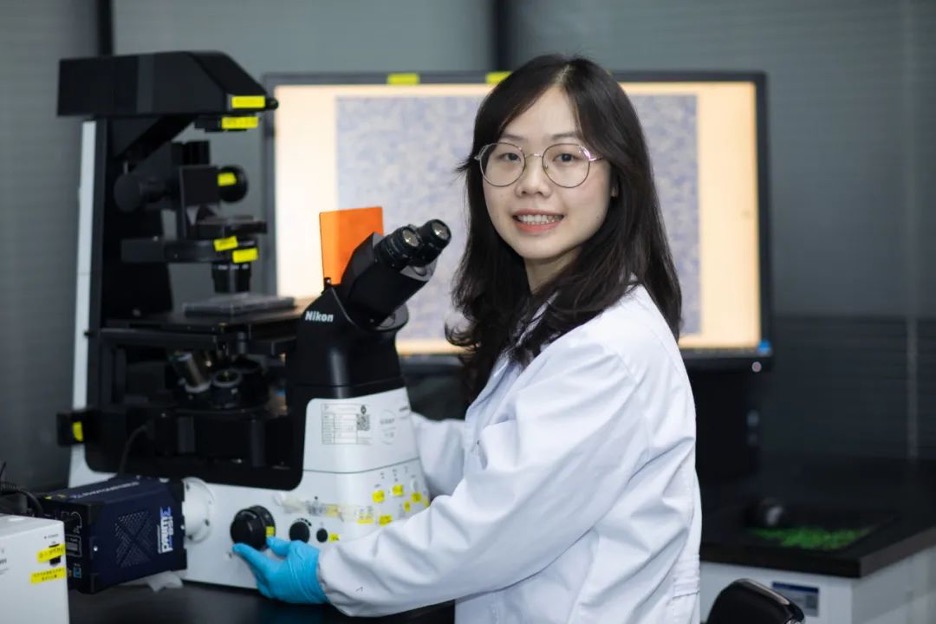
Bingqing Yao
Bingqing Yao joined the School of Life Sciences at Westlake University as a doctoral student in 2018. Her research investigates how trace amounts of intracellular bacteria in breast cancer tissue under physiological conditions play a key role in promoting tumor cell metastasis and colonization.
Tumor microbiota are ubiquitous in various cancers, but the question of their function has been neglected for a long time. The first large-scale study of the human tumor microbiome, published in 2020, reported the presence of bacteria in tumors previously thought to be sterile. These tumor microbiota were specifically localized in the cytoplasm, but their functions were not yet clearly defined. Since research on the tumor microbiome is still in early stages of development, many systems and standards have not yet been established. Therefore, it is urgent to establish a suitable system and research methods to systematically study the functions of tumor microbiota.
Yao focuses on the functions and mechanisms of tumor microbes mediating the occurrence and development of cancer. She mainly uses mouse spontaneous tumor models as well as imaging and sequencing methods, combined with cell biology and biochemical research methods, to build a comprehensive tumor microbiome research system. This has revealed the important physiological function of the tumor microbiota in promoting breast cancer metastasis and has opened a new field of research, providing new insights for in-depth understanding of tumor metastasis, and offering a potential new clinical treatment for breast cancer.
In 2022, Yao was a first author of a related study published in Cell.
RELATED



-
STUDY WITH US
-
WORK WITH US
-
CONTACT US
-
YUNGU CAMPUS
-
No. 600 Dunyu Road, Sandun Town, Xihu District, Hangzhou, Zhejiang PR China Post code:310030 E-mail:office@westlake.edu.cn
-
-
YUNQI CAMPUS
-
No.18 Shilongshan Road Cloud Town, Xihu District, Hangzhou, Zhejiang PR China Post code:310024 E-mail:office@westlake.edu.cn
-
-
-
浙ICP备18025489号 浙公安备33010602007514号 Copyright © Westlake University. All Rights Reserved
-


If you are interested in supporting us or making a contribution, please contact:
Office of Public Affairs, Westlake University
Email: media@westlake.edu.cn
OR
Westlake Education Foundation
Email: office@wefoundation.org.cn
Phones: 0571-86886859
Fax: 0571-85271986
