


Search websites, locations, and people




ABOUT
ACADEMICS
RESEARCH
ADMISSIONS
NEWS & EVENTS
CAMPUS LIFE
INNOVATION
CAREERS

If you are interested in supporting us or making a contribution, please contact:
Public Affairs, Westlake Institute for Advanced Study
Email: info@wias.org.cn
OR
Westlake Education Foundation
Email: office@wefoundation.org.cn
Phones: 0571-86886859
Fax: 0571-85271986

Jian Yang Joins Westlake University
07, 2023
Email: zhangchi@westlake.edu.cn
Phone: +86-(0)571-86886861
Office of Public Affairs
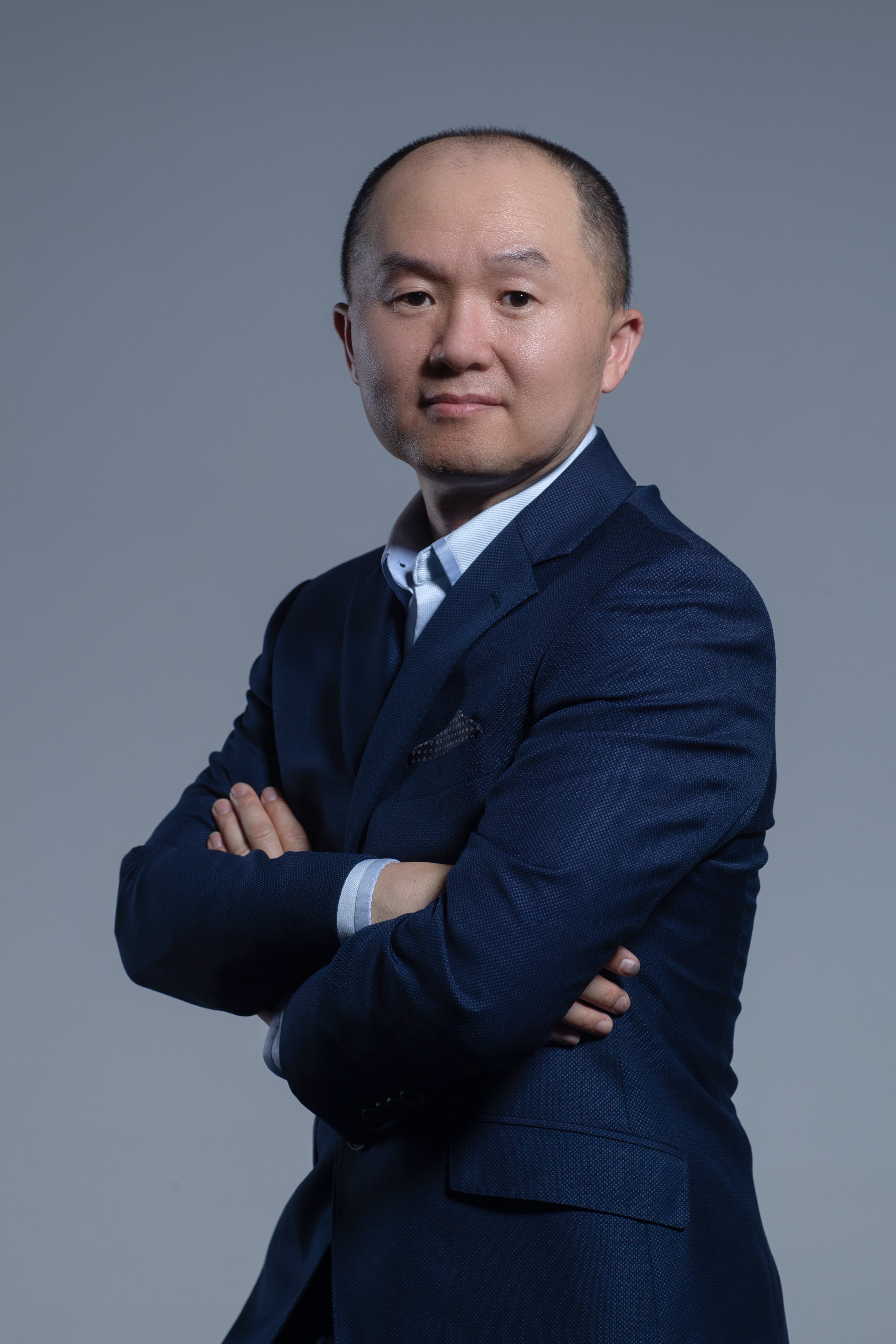
Prof. Jian Yang, an internationally renowned expert in biomaterials, has joined Westlake University as a chair professor of biomaterials and regenerative engineering and associate vice president. Yang comes to Westlake from a professorship at Pennsylvania State University in the U. S., where he served with distinction.
He will follow his considerable achievements in the U. S. by pursuing his groundbreaking vision at Westlake University, carrying out research in the interdisciplinary realm of biological materials, which has enormous potential and a wide range of applications in areas including regenerative medicine, biosensors, bioimaging, drug delivery, and disease diagnosis. He is already engaged in pioneering work on tissue and organ regeneration using biomaterials based on stem cells. Yang excels at introducing biological materials to different disciplines, from epigenetics, gene editing, immunotherapy, and neural engineering, to biosensing and bioimaging.
Yang's decision to join Westlake University was based on his belief that China offers the ideal environment for effective collaboration and coordination of efforts to achieve breakthroughs in science. He views Westlake University as the perfect environment for translating his dreams into tangible results. Yang fully intends to be a productive member of the Westlake research community, leveraging his experience as one of the founders of the Chinese American Society for Biomaterials (CASB), where he served as president for four years. His adeptness at bringing together exceptional scientists with shared research interests demonstrates his potential to be a cohesive and influential force.
Yang hails from a small town on the northwestern border of Jiangxi Province, surrounded by forests, rich farmland, and ancient cities. At school, Yang says, he was not exceptional. He recalls, "My grades were okay, but not excellent. I was quite rowdy, and my biggest strength was having many friends." He truly began his life’s journey during his four years at college. As he says, "My alma mater, Nanchang University, had a significant impact on my life."
There, he discovered how science can solve practical problems and be translated into industrial processes. His mentor, Prof. Fengyi Li, had a profound and lasting influence on his style of research and teaching. Yang contributed to the development and successful commercialization of organic silicon synthesis catalysts. "I was involved in everything in the laboratory, from setting up the lab and conducting research to even installing fume hoods. I gained valuable experience during this process, and my studies at the university laid a solid theoretical foundation for future interdisciplinary work," he recalls.
Yang continued his studies as a Ph.D. student at the Institute of Chemistry at the Chinese Academy of Sciences. He studied under Prof. Shengguo Wang, a renowned scientist in the field of biomaterials. "Under the guidance of Prof. Wang, I developed research interests, research abilities, and research confidence. It made me truly fall in love with research." He considers himself fortunate that, "in every step of my growth, I encountered many excellent teachers and friends, including my mentor during my postdoctoral period at Northwestern University in the United States, Prof. Guillermo Ameer. Many teachers have deeply influenced me and provided significant help. I still follow their examples in my teaching and research career."
Yang is particularly well-known for his more recent work on citric acid, a common substance that has myriad everyday uses – as a food additive, an ingredient in cleaning agents, and in pharmaceuticals, among many others.
Yang describes citric acid as "an ordinary, white, crystalline powder, with a molecular formula written as C6H8O7: this is the face of organic citric acid in both the real and chemical worlds.”
However, it is much more than just that, as Yang explains: “Natural citric acid is widely present in fruits such as lemons, oranges, and pineapples, and even in the bones, muscles, and blood of animals. It can also be synthesized artificially by fermenting sugary substances like sugar, molasses, and starch. For instance, the familiar taste of lemon in beverages like Sprite doesn't come from actual lemons but rather owes its tangy flavor to citric acid.”
Because citric acid occurs naturally in humans, it can "harmoniously coexist" with the human body. "When you introduce citric acid to the human body, it doesn't cause chronic inflammation, unlike most synthetically produced high-molecular-weight products that can lead to immune responses in human tissue," explains Yang.
Yang became interested in the question of whether citric acid that is introduced into the human body can affect cellular behavior and contribute to life processes in the same way as the natural citric acid within our bodies.
Yang embarked on a postdoctoral research project in the U.S. in early 2003 in which he began using citric acid to develop biodegradable biomaterials. Little did he know that his curiosity would open up an entirely new field of research.
"The metabolic energy requirements of different cells vary at different time points. After being 'ingested' by cells, citric acid regulates cell metabolism and energy acquisition. By controlling citric acid intake, we can influence this behavior, regulating stem cell differentiation and immune responses at a deeper level. This promotes bone regeneration, blood vessel regeneration, neural growth, and more," explains Yang.
Yang became a pioneer and leader in this field, establishing a methodology for citric acid biomaterial development. He has developed a range of multifunctional citric acid biomaterials, many of which have found practical applications.
As an assistant professor at the University of Texas in 2006, Yang was supervising one of his students, who was reacting citric acid with amino acids in an effort to create an anticoagulant material. After synthesis, the student subjected the material, in solution in a test tube, to nuclear magnetic resonance testing. As Yang describes, "Under sunlight, he noticed that the tube emitted blue fluorescence....but at that time, no known degradable high-molecular-weight material could emit light on its own without an external luminescent substance. This serendipitous observation captured my attention," Yang said. Three years later, after intensive research, he was able to reveal for the first time, in the Proceedings of the National Academy of Sciences (PNAS), that when citric acid reacts with any amino-containing molecule, it creates a luminescent material. This was the pioneering moment for the new field of citric acid luminescent materials, which have a broad range of potential applications in tissue regeneration, biosensing, bioimaging, anti-counterfeiting encryption, and more.
In 2020 and 2021, the U.S. Food and Drug Administration (FDA) approved three orthopedic implant devices made from a citric acid-degradable material known as POC. POC is the world's first (and currently only) thermosetting degradable synthetic polymer material authorized by the FDA for use in human implants. It was created in Yang’s lab, with its origins during Yang's postdoctoral research at Northwestern University and continuing through his time at the University of Texas at Arlington and Pennsylvania State University. After nearly 17 years of development, POC has finally been successfully translated into industrial production.
The development of POC perfectly reflects the idea that hard work pays off, and that "lightbulb moments" – what Yang describes as "scientific serendipity" – often actually arise as a result of unwavering determination and persistence over long periods of time.
Gathering Talent
Yang's laboratory at Westlake University is named the Biomaterials and Regenerative Engineering Alliance Laboratory – a.k.a. “The B-Real Lab” – reflecting his straightforward personality and the spirit of his journey at Westlake.
His ultimate dream is to use citric acid as the basis for materials that can be used to repair and reconstruct human tissue and organs.
As he says, "The human body contains many complex tissues. For example, reconstructing an entire hand is very difficult because it involves various tissues such as skin, cartilage, bone, nerves, blood vessels, fat, tendons, ligaments, and more. There have been significant breakthroughs in the regeneration and repair of individual tissues, but integrating all these parts into a complex, vital, and functional tissue is highly challenging."
Yang does not expect to achieve his goal alone. He fully understands the value of collaboration and cooperation in scientific research, and its importance at Westlake University. “After all,” as he says, “miracles are made when talent gathers together.”
RELATED



-
STUDY WITH US
-
WORK WITH US
-
CONTACT US
-
YUNGU CAMPUS
-
No. 600 Dunyu Road, Sandun Town, Xihu District, Hangzhou, Zhejiang PR China Post code:310030 E-mail:office@westlake.edu.cn
-
-
YUNQI CAMPUS
-
No.18 Shilongshan Road Cloud Town, Xihu District, Hangzhou, Zhejiang PR China Post code:310024 E-mail:office@westlake.edu.cn
-
-
-
浙ICP备18025489号 浙公安备33010602007514号 Copyright © Westlake University. All Rights Reserved
-


If you are interested in supporting us or making a contribution, please contact:
Office of Public Affairs, Westlake University
Email: media@westlake.edu.cn
OR
Westlake Education Foundation
Email: office@wefoundation.org.cn
Phones: 0571-86886859
Fax: 0571-85271986
