


Search websites, locations, and people




ABOUT
ACADEMICS
RESEARCH
ADMISSIONS
NEWS & EVENTS
CAMPUS LIFE
INNOVATION
CAREERS

If you are interested in supporting us or making a contribution, please contact:
Public Affairs, Westlake Institute for Advanced Study
Email: info@wias.org.cn
OR
Westlake Education Foundation
Email: office@wefoundation.org.cn
Phones: 0571-86886859
Fax: 0571-85271986

Hang Shi’s Team Embarks on Breakthrough Research in π-coordination Catalysis
05, 2023
Email: zhangchi@westlake.edu.cn
Phone: +86-(0)571-86886861
Office of Public Affairs
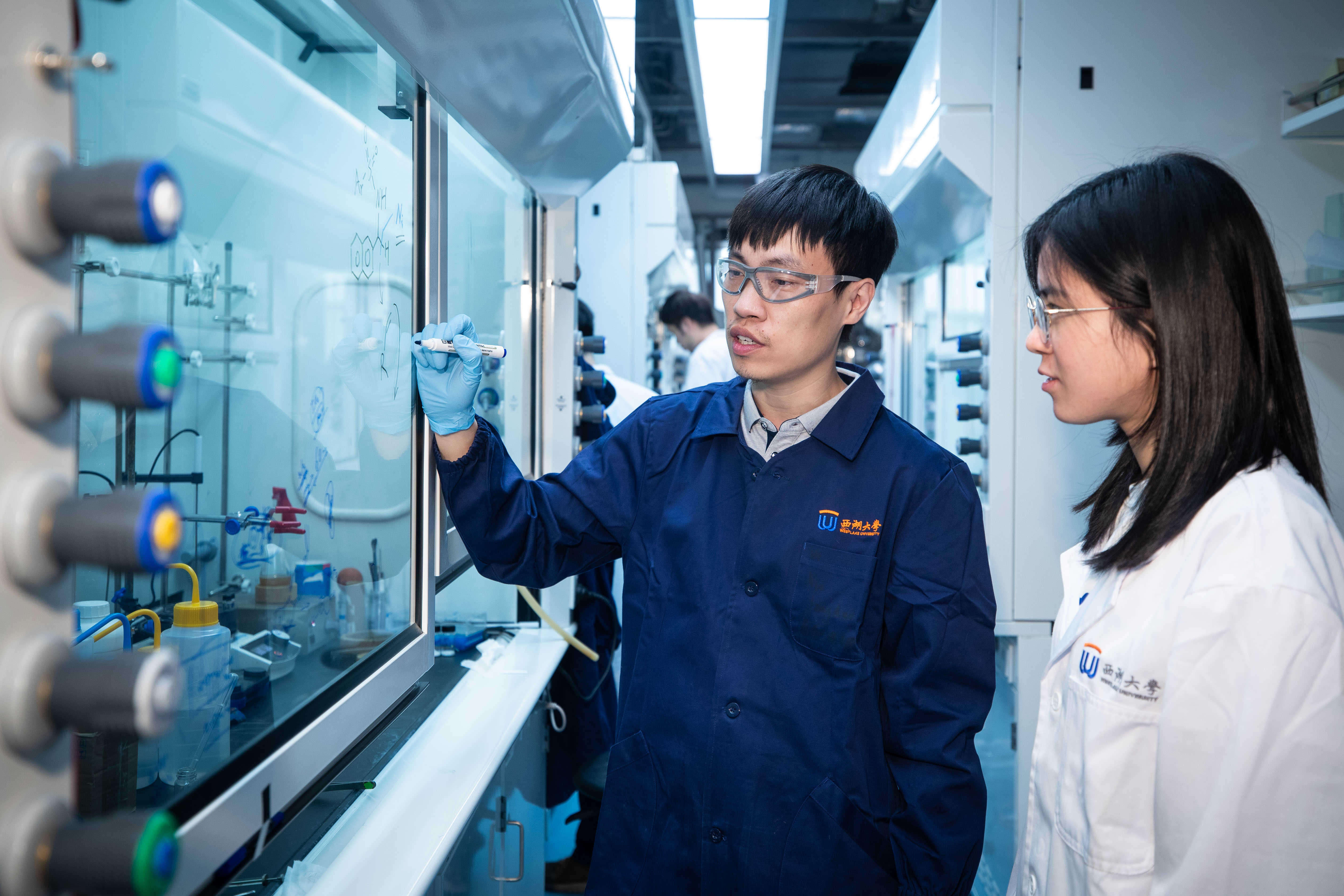
Catalytic Dehydrogenative (3 + 2) Cycloaddition of Alkylbenzenes via π-Coordination
(3 + 2) cycloadditions represent formidable transformations that empower the construction of five-membered carbocycles, seamlessly merging all-carbon 1,3-dipoles with an olefinic partner. Traditionally, the creation of charge-separated motifs has hinged upon the enigmatic influence of donor and acceptor functionalities, effectively dispersing charge across the molecular framework. However, in a complementary approach, the deployment of transition-metal catalysts, endowed with their unparalleled reactivity and charge-distributing capabilities, provides a gateway to generating all-carbon dipoles and their cognate entities. Recently, the groundbreaking work from the Shi lab has shed light on this frontier, showcasing a rhodium-catalyzed dehydrogenative (3 + 2) cycloaddition of alkylbenzenes with 1,1-bis(phenylsulfonyl)ethylene. In a display of ingenuity, they artfully orchestrated deprotonation, (3 + 2) cycloaddition, re-aromatization, and arene exchange within the confines of a single catalytic cycle, all facilitated by their novel π-coordination strategy.
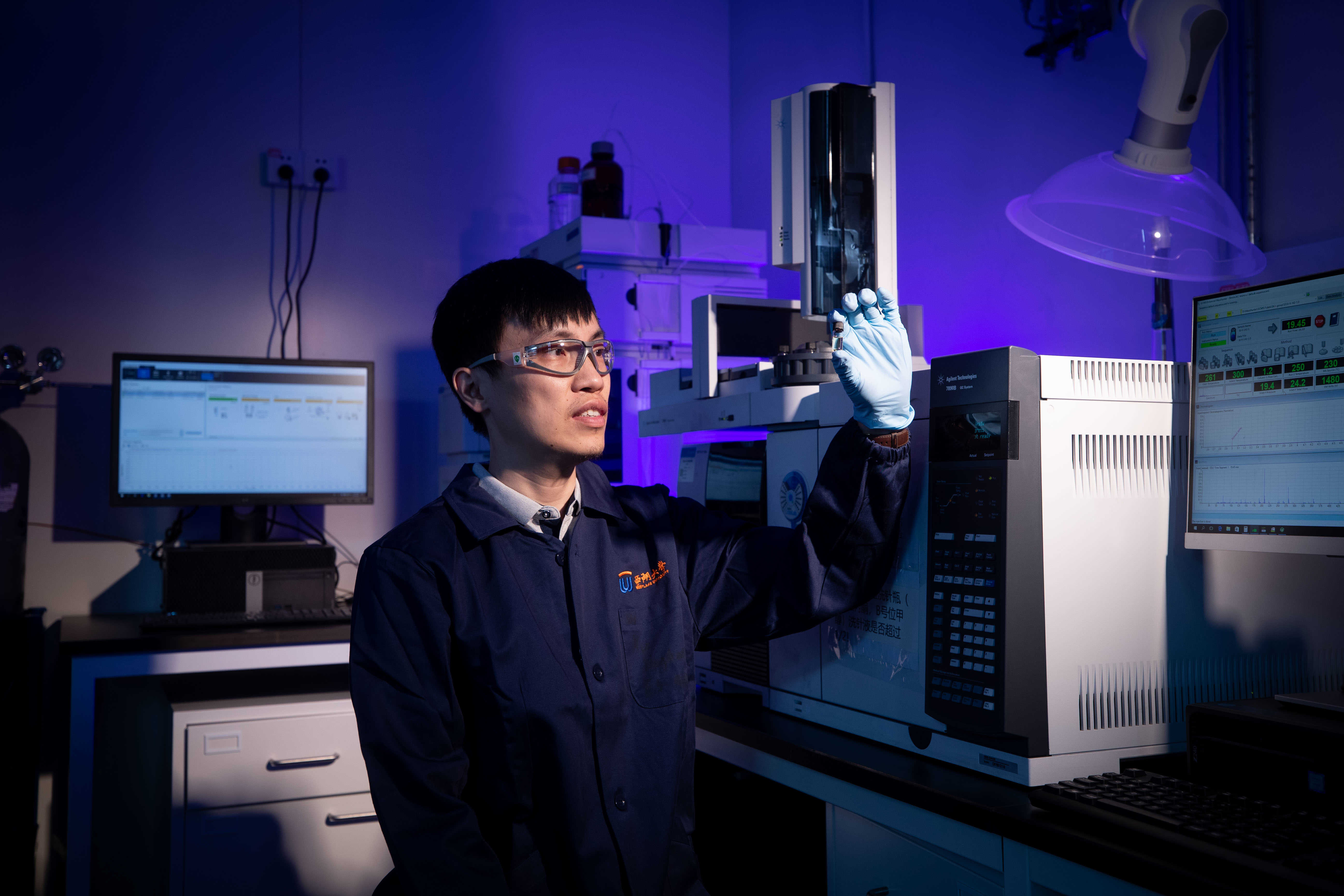
Catalytic SNAr Hexafluoroisopropoxylation of Aryl Chlorides and Bromides
Fluoroalkyl aryl ethers stand as prized structural motifs within the realm of pharmaceuticals, owing to their heightened metabolic stability and enhanced lipophilicity when compared to their nonfluorinated counterparts. Notably, the exploration of hexafluoroisopropyl aryl ethers has been relatively limited, possibly due to the dearth of efficient synthetic methodologies available. However, breaking new ground, the Shi lab has recently unveiled a concise and ingenious approach for the synthesis of diverse hexafluoroisopropyl aryl ethers. This achievement has been accomplished through the development of a catalytic nucleophilic aromatic substitution, employing readily accessible and abundant aryl chlorides or bromides as the substrates. The catalyst deftly activates the aromatic ring through η6-coordination, thereby bestowing it with heightened reactivity, thus enabling the facile attack by the weakly nucleophilic hexafluoro-2-propanol.
Asymmetric Hydrogenation of 1,1-Diarylethylenes and Benzophenones Through a Relay Strategy
Homogeneous transition-metal catalysts featuring chiral ligands have found widespread application in the asymmetric hydrogenation of unsaturated compounds like olefins and ketones, offering an efficient and concise route to access products bearing chiral carbon centers. However, when faced with a double bond carrying two substituents that are both sterically and electronically similar, differentiating between the re and si prochiral faces poses a formidable challenge for these catalysts. Recently, Shi lab has devised a relay strategy to construct compounds harboring a chiral gem-diaryl carbon center. This strategy entails a combination of selective arene exchange between 1,1-diarylethylenes or benzophenones with (naphthalene)Cr(CO)3, followed by subsequent asymmetric hydrogenation. Notably, during the hydrogenation process, the Cr(CO)3 moiety serves as a crucial facilitator in discriminating between the two prochiral faces of the substrate's double bond. This discrimination is achieved through the formation of a three-dimensional complex with one of the aromatic rings, selectively facilitated by the process of arene exchange. This methodology illuminates a new avenue for the creation of compounds possessing a chiral gem-diaryl carbon center, showcasing the power of selective arene exchange and transition-metal catalysts in orchestrating complex transformations with exceptional control.



-
STUDY WITH US
-
WORK WITH US
-
CONTACT US
-
YUNGU CAMPUS
-
No. 600 Dunyu Road, Sandun Town, Xihu District, Hangzhou, Zhejiang PR China Post code:310030 E-mail:office@westlake.edu.cn
-
-
YUNQI CAMPUS
-
No.18 Shilongshan Road Cloud Town, Xihu District, Hangzhou, Zhejiang PR China Post code:310024 E-mail:office@westlake.edu.cn
-
-
-
浙ICP备18025489号 浙公安备33010602007514号 Copyright © Westlake University. All Rights Reserved
-


If you are interested in supporting us or making a contribution, please contact:
Office of Public Affairs, Westlake University
Email: media@westlake.edu.cn
OR
Westlake Education Foundation
Email: office@wefoundation.org.cn
Phones: 0571-86886859
Fax: 0571-85271986
